Notice:
The advice given on this site is based upon individual or quoted experience, yours may differ.
The Officers, Staff and members of this site only provide information based upon the concept that anyone utilizing this information does so at their own risk and holds harmless all contributors to this site.
I'd put it above the head... Centered on the foredeck, it'll be just waiting to be crushed by somebody handling docklines, the anchor, or the jib (like some of our skylights have been). Also, while very quiet, they aren't totally silent--you don't want it running right over your head when sleeping in the v-berth.
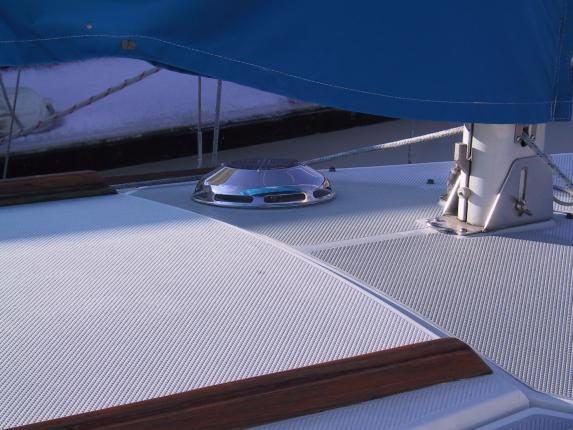
The "mushroom" has something like four little legs--you can orient it so one of them helps to prevent a sheet from catching in the slot around the base (which is pretty narrow as I recall).
I have a solar vent just forward of the mast and aft of the hatch between the head and sink. I have yet to snag a halyard, and you are not likely to step on a centerline spot that close to the mast in normal activity - not that it can't happen! The opening around the base is less than 1/4" high and my halyards don't usually drag on deck during tacks anyway.
There was a vent in the main cabin area adjacent to the mast from the PO. I measured the hole and figured a NICRO Solar Vent would fit. Picked up the unit from WM, popped out the Vent Cover and pushed the solar vent into place. Perfect fit. No snags with Genoa and have not stepped on it in over 2 years.
I have a question that your answer will benefit me, and may benfit other readers.
How are you using the vent?
For example, do you set it to draw into the boat during the evenings?
Do you use the vent to draw air out during the days? What has worked best for you boat?
Moreover, what air flow have you noticed from the quarter berth, forward berth, and cabin itself?
Some folks have recomemended two vents, one to draw, and one to blow out.
It is appearent from your picture that sheet lines would not be an issue.
Much obliged
BTW - I listed this thread as a Micro vent rather than a Nicro vent, heh, they seemed small enough, I should have said Micro Nicro Nice Nuclear Niffty vent. Same difference perhaps.
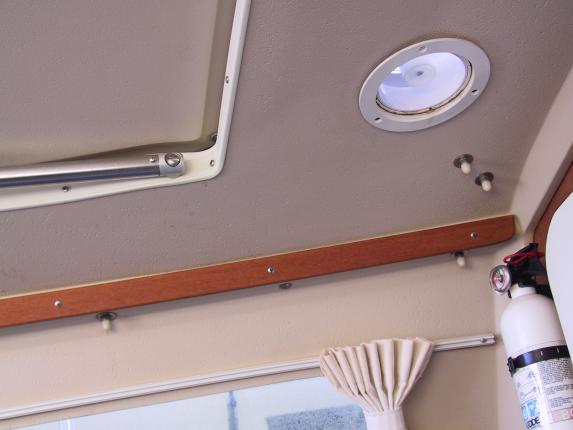
I have only the one solar vent and it is set up to move air out of the main cabin. I would suspect that air is drawn in thru the opening in the companionway boards. These vents move very little air and in fact the air moved would be barely noticeable unless perhaps holding a piece of paper up to the vent to gage movement of the paper as an indication of air flow. The vent works all the time. There is no timer, etc. If the sun is out, the battery gets charged while the fan operates. If the sun is not out, then the fan runs off the rechargeable battery. The idea is to just get some movement of air and that supposedly helps prevent mildew.
The areas outside of the main cabin do not get whatever air flow there is and so I have something else working there. Hanging in the porta-potti area is one of those dehumidifier canisters. IT absorbs moisture. Sort of is in conflict with the solar vent that brings new air/potential moisture into the boat. The important thing is to keep some air flow and in areas where there is no air flow, then I have this dry canister that absorbs moisture. It is sort of an interesting cartridge in that it absorbs moisture but then you bring it home and hook it to the electric outlet. It then heats up and burns away the moisture absorbed by it's beads. Then I put it in a plastic bag with a know and bring it onboard the boat and the process starts again. West Marine does not sell it but Boater's World does.
If you want more noticeable air flow, then some install a bigger, more powerful solar vent or a second solar vent with one pulling air in and the other pushing it out.
[opinion] Deric: One solar vent exhausting air will do it. Air will enter at the companionway. The main principle is that as air cools at night, it starts depositing its humidity like dew on the cooling surfaces inside the boat. But if you push that moist air out and thereby pull in some cooler air from outside, it has already dropped much of its moisture. Solar vents don't generate wind, but they can move the volume in a C-25 in an hour or less, depending on the vent.
BTW, humidity equalizes <i>very</i> rapidly in air. The V-berth, head, salon, and quarterberth will all be protected equally by one power vent--except maybe if it's right by the companionway. [/opinion]
My C25 had a solar powered vent forward of the mast on the port side cabin top, and moves air out from the head. It keeps the boat mildew free by blowing air out whenever the sun hits it.
However, it could catch the lazy jib sheet once in a while, so I installed white duct tape strips along the bow-facing edge of the mushroom cap. This has solved the problem, and the sheets never get hung up. I could design and build a plastic or aluminum sheet fender, but replacing the duct tape each spring does the trick, too.
I bought a Mushroom Ventilator from Defender. I wanted something that would close up tight and be walkable. I have not installed it yet. Item #: 901411 7 9/32" Diameter. Stainless steel Manufacturer: VETUS Model #: DARTAGNAN 1
I bought a Nicro at the boat show (good deal!) I think they came with a pamphlet that shows how many of each type of vent you need. I think I got a Day & Night 300 and according to the manufacturer's info, one is enough.
<blockquote id="quote"><font size="1" face="Verdana, Arial, Helvetica" id="quote">quote:<hr height="1" noshade id="quote"><i>Originally posted by Dave Bristle</i> <br />They only have one left and won't be carrying it any more! (It must be passive, right?) <hr height="1" noshade id="quote"></font id="quote"></blockquote id="quote"> I saw that, I imagine Defender is dropping Vetus. It is an odd vent considering most market their CFM and as a passive unit it will be lower for a given size, and the cut out is metric, (damn French, but don't you love the name). However I want to vent the heat my refrigerator puts off so I see it as doing a good job of that and being virtually indestructible. Remember on my 82 I installed a passive SS unit in the aft wall of the anchor locker to deal with the frig heat. Who knows, this one may end up there as well.
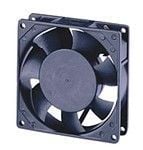
Although not yet installed, I'm putting in a ventilation system that functions about the same as my home's thermostatically controlled powered roof vent. It consists of a 4" 110v equipment fan and a line voltage, thermostatic switch (cooling only). The fan will be installed in the bulkhead between the port cockpit locker and the area below the icebox, with the thermostat being mounted in the head area. Vent openings to the bilge with be installed on both sides of the V-berth door and in the bow eye access cubby hole.
Operationally, the fan will turn on at a preset temperature, between 50 and 90 degrees, and draw air from the bilge area under the floor into the cockpit locker which will then vent out the existing clamshell vents. The negative pressure in the bilge will then draw cabin air from the vents in the V berth area which will then bring in cool outside air through the companionway hatch openings and into the cabin. I may even put a vent in the back of the quarterberth bulkhead to get ventilation throughout the whole boat.
With this system, the entire cabin should remain cooler and well ventilated. Additionally, the entire bilge will also be well ventilated preventing all sorts of stagnant air issues. The same goes for the cockpit locker.
Cool idea Don. Send art when you have it installed.
Bringing air up from the bilge should act like an air conditioner of sorts. The coolness of the water (and subsequently the hull) should dissipate heat, etc. I'd be a little worried about potential for condensation under the cabin sole since you're drawing air from inside the cabin to the cooler bilge. Maybe collect enough to cause a mold/mildew issue? Guess that depends on dew point, relative humidity and a lot of other stuff I only slightly understand. The volume of air being moved may also play a role in that.
I like this idea a lot. Keep us posted. What about 12 volt application? This could be enough to make me go out and get a solar panel.
<blockquote id="quote"><font size="1" face="Verdana, Arial, Helvetica" id="quote">quote:<hr height="1" noshade id="quote"><i>Originally posted by John Russell</i> <br />Bringing air up from the bilge should act like an air condtioner of sorts.<hr height="1" noshade id="quote"></font id="quote"></blockquote id="quote">
Actually, the bilge air will be exhausted directly to the cockpit locker and replaced by fresh cabin air. Going the other way would bring the sometimes malodorous bilge air into the cabin.
No, I have not installed the vent system yet, but if all goes well, I might do it this coming weekend. This past weekend was actually the first time I've done some serious work on the boat. (Wash, wax, paint...etc).
When I install the vent system, I'll pass on the info.
Don, any particular reason you are using a 110v fan?
The reason I ask is that I have a couple of large fans from my old webservers, they run off 12v (I'm using one in my office as a replacement for my 12v fridge cooling fan)
I'm going with a 110V fan because I wanted something that could move some decent air and would operate automatically when I'm away from the boat. When it's all closed up, the boat can become quite the hothouse during the summer months. Also, it would be nice when overnighting, although I don't do much of that.
Notice: The advice given on this site is based upon individual or quoted experience, yours may differ. The Officers, Staff and members of this site only provide information based upon the concept that anyone utilizing this information does so at their own risk and holds harmless all contributors to this site.