Notice:
The advice given on this site is based upon individual or quoted experience, yours may differ.
The Officers, Staff and members of this site only provide information based upon the concept that anyone utilizing this information does so at their own risk and holds harmless all contributors to this site.
I have an '89 Cat 25 with the usual two storage batteries. Would appreciate advice/experience re on-board charging systems to consider adding. The Honda outboard has an alternator, but runs very little. Am considering either or both dockside power and solar battery chargers/tenders. Would also like to power my laptop as a chart plotter (added load), and will be using a tiller pilot (another added load), so need the batteries kept up. Anybody out there have the same setup and electrical usage? What will I need? Thanks!
Mike Aimone Belleville, MI C25 #5856 SR/WK "Lean Machine"
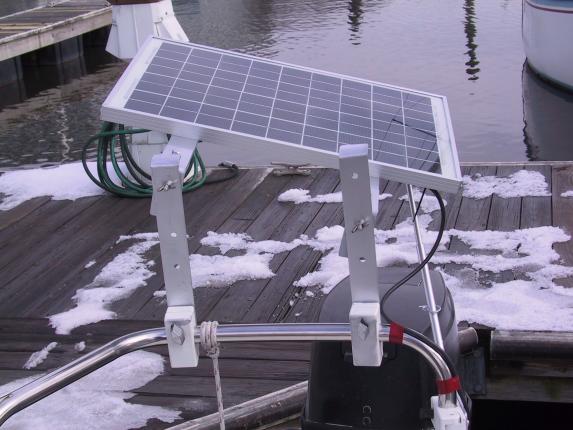
I also have an '89 with same dual battery bank but I tend to have very light electrical loads - Only occasional use of nav lights and regular use of the fishfinder. Also occasional use of the DC powered fans I installed. I use a 20 watt solar panel and it works fine for keeping the batteries charged. I have had my batteries for 5 1/2 years and the PO had them for at least a year. I also have a dual battery bank battery charger made by Guest that is permanently permanently wired in for use w/shore power and it has separate DC leads to each battery. I use that when I stay overnight at a marina and generally will be running the cabin lights, radio, etc during our stay.
For your higher electrical loads, you would probably need at a minimum, a 30 watt solar panel, maybe larger. Solar panels are not all made the same. Inorder to keep the footprint (size) of the panel as small as possible, if you are considering going with a solar panel, you would best to get a higher efficient panel (poly vs monocell) which will cost more. If you were to go with the least exopensive panels, you will wind up with a very large panel. I have a Kycera 20 watt with a 20"x14" footprint and I believe their 30 watt is approximately 21"x21". Obviously a 40 watt will be sized proportionately larger. I bought my panel from Northern Arizona Wind & Sun. I noticed they still sell my Kyocera Panel but they also have a Solartech 30 watt 26"x16" and aSolartech 45 watt 26"x21". http://www.solar-electric.com/1to39wasopa.html
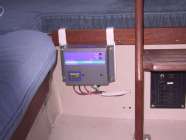
More Details and photos of my solar panel, solar controller, battery charger and the mountings are on my website.
I put my Charles charger next to the batteries. It is expensive but for that money you get a charger with minimal heat issues so it worked well in the bilge.
Jan, you do not have an '89. The '89 was modified in a lot of ways. The battery box was moved to the centerline of the boat and placed under the companionway stairs, in the bilge under the quarterberth.
Sorry I took so long to reply to you guys -- the info is great. I've gone with the onboard Guest charger, and will save my pennies for a solar panel next season. To make life easier, I've given up on the full-time laptop as a chartplotter and chose a Raymarine with much less load requirement. Thanks again.
[quote]Solar panels are not all made the same. Inorder to keep the footprint (size) of the panel as small as possible, if you are considering going with a solar panel, you would best to get a higher efficient panel (poly vs monocell) wlhich will cost more. If you were to go with the least exopensive panels, you will wind up with a very large panel.[quote]
I was under the impression that monocrystaline are more efficient than polycrystaline panels.
Paul - You make a good point regarding footprint size of the panel vs efficiency. Though, I thought the polycrystals were the ones that were more money and more efficient. In any case, my Kyocera 20 watt is of the more efficient design with only a 14"x20" footprint. I think their 30 watt is a 20"x20". The rigid panels generally come with much longer warranties than the flex style solar panels and the rigid ones take up less room but then again they are made in both mono and polycrystal configurations. The more expensive ones are the ones that are genraly with the smaller footprint per watt. The more efficient ones also provide some charging even if slightly shaded but the less efficient configurations, if you hold just one finger blocking part of the panel, they generally will not charge at all. My panel pictured in an above posting was bought along with a digital solar controller from Northern Arizona Wind & Sun. you can search the web for their website address. They usually have a number of panels to review, though, not too many in the smaller sizes.
I have similar loads to you and a 20w panel. You can see the panel mounted on my stern pushpit here:
It is easy to adjust slightly to better catch the light if necessary.
My loads are fairly light. I've replaced all of my lighting with efficient LEDs. My electronics are a tiller pilot, handheld GPS (that we power through the USB port) and a fish finder. We have a fixed VHF radio that is normally on and a car radio that is normally off. I charge our iPad and cell phones from the boat sometimes, but they aren't on that often.
I've never seen our voltage drop below about 12.5 except for when the tiller pilot is putting on a high temporary load (why these things don't have limit switches and strain the motor when the pushrod is at it's limits is beyond me). We have two new (bought in March) group 24 batteries and no shore power, but our motor does have an alternator.
So far I've only done overnighters, so I haven't heavily pushed the electrical system. Later this summer I'll be on the boat for 12 days and can report back on how the batteries did at the end of that.
Notice: The advice given on this site is based upon individual or quoted experience, yours may differ. The Officers, Staff and members of this site only provide information based upon the concept that anyone utilizing this information does so at their own risk and holds harmless all contributors to this site.