Notice:
The advice given on this site is based upon individual or quoted experience, yours may differ.
The Officers, Staff and members of this site only provide information based upon the concept that anyone utilizing this information does so at their own risk and holds harmless all contributors to this site.
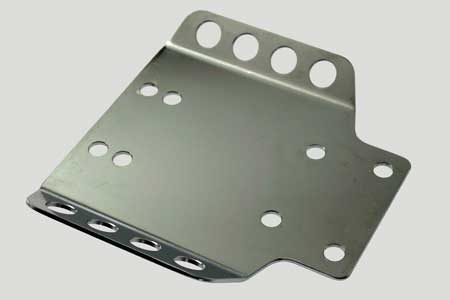
I have my new mast bottom plate in from CD and I thought I'd add the plate on top of the old plate rather than remove it. I expect to remove the two front lag bolts that go into the compression post and the two aft bolts that go through to nuts in the cabin roof. Then remove the old place and scrape off as much old bedding compound as I can and coat it top and bottom with bedding compound and add the new plate with compound on the bottom of it and tighten it all back down and clean up the compound. The lag bolts will need compound and that the aft bolts may not reach, so I might need to add longer bolts.
I expect this might work better than trying to remove the old plate as it might cause leaks with the new plate having a new and bigger footprint.
Suggestions?
regards.ray
Ray in Atlanta, Ga. "Lee Key" '84 Catalina 25 Standard Rig / Fin Keel
I replaced mine, throwing the old one away. This is a great time to take a look at your core under the mast and make sure there is no rot or water. Mine was dry. I liberally applied polysulfide caulk (Boatlife) in the screw holes and under the new plate so that it ozzed out the sides when I tightened the screws. No leaks. This is an easy repair. No reason to keep the old plate intact.
I'll take pictures when I do it. I was concerned that the mast was compressing on the deck, but that may be the original design. I inspected the bottom of the compression post as best I could frwd of the bilge and it looks dry and sound, the bilge has always been dry. I expect leaving the old plate is just more trouble that it is worth.
I don't have leaks at the top of the post now, the compound below that plate just looks old.
Halyard plate. Using the old mast step. Wanna add some blocks and Dave was nice enough to point out that the old/regular method for blocks on the cabin top on this boat would compress the liners together and lead to possible leaks.
<blockquote id="quote"><font size="1" face="Verdana, Arial, Helvetica" id="quote">quote:<hr height="1" noshade id="quote"><i>Originally posted by redeye</i> <br />...I thought I'd add the plate on top of the old plate rather than remove it...<hr height="1" noshade id="quote"></font id="quote"></blockquote id="quote">On top of what old plate? The halyard plate can't fit "on top of" the mast step--only under it. But then you say...
<blockquote id="quote"><font size="1" face="Verdana, Arial, Helvetica" id="quote">quote:<hr height="1" noshade id="quote">...Then remove the old place <i>(plate? ...meaning step?)</i>... and add the new plate with compound on the bottom of it and tighten it all back down... I expect this might work better than trying to remove the old plate...<hr height="1" noshade id="quote"></font id="quote"></blockquote id="quote">I'm confused.
IMHO - if they fit together and your lines and hardware will work with this arrangement, it can only be a good thing because as you've noted, it's more strength.
It won't hurt, but IMHO a block will explode, spewing beady little balls all over the deck, or a sheave will break in the organizer or masthead long before the plate gives. The force against the plate is at 45 degrees, just the way it's shaped--no bending force. I can't imagine that heavy stainless piece breaking--it's the strongest component in the halyard system.
Nothing about this had made sense to me. I am beginning to wonder if Ray has some "repair" plate on his deck now. Ray, does your mast step look something like the second picture in my other post? (Mine did not have the vang and down haul loops.) Is there something under it? If that something under it does not look essentially like the first photo then what does it look like? ... and why is it there? There is no reason for there to be a plate under the mast step unless it has a rim of holes for mast blocks.
I thought my boat had a halyard plate under the mast step that did not have the "wings" on it. I did not know that the mast halyard plate was in addition to rather than a replacement of the halyard plate. I thought the mast halyard plate was a part that already existed but the new one had additional features.
So now thanks to you guys, I'm thinkin the mast step is the only thing at the bottom of the mast and I'm simply adding the new mast halyard plate below it. ( Duhh )
Thanks for the help and yet another conundrum... My mast step is one that does not have the built in bails.
What is a mother to do???? "Leaky" is always needing the new and improved version!!!
I guess I'll find out next time I'm out there, and I'll take pictures.
I'll try to post image before discussion. It will make me address the issue correctly and assist my feeble mind in remembering exactly what is where. I've got an image of the mast bottom and there is only the mast step at the bottom and I'm adding an additional plate below the mast step ( the Halyard Plate ) to hold the halyard blocks.
Please forgive the long winded lolly gagging over adding a metal plate.
I think you're on to something, Ray... Thinking back, my mast step had an "extension" welded to it--a plate apparently intended to allow the step to be thru-bolted just forward of the compression post, as well as screwed into the post. Maybe you're looking at the same extension.
You'll have some brown goop to scrape off and clean up (with something like GooGone or something as simple as mineral spirits)... but the rest is easy. I had to have the new plate drilled to match the old, but looking at the pictures of the newer one, I think that has been taken care of for you.
Notice: The advice given on this site is based upon individual or quoted experience, yours may differ. The Officers, Staff and members of this site only provide information based upon the concept that anyone utilizing this information does so at their own risk and holds harmless all contributors to this site.