Notice:
The advice given on this site is based upon individual or quoted experience, yours may differ.
The Officers, Staff and members of this site only provide information based upon the concept that anyone utilizing this information does so at their own risk and holds harmless all contributors to this site.
In [url="http://www.sailmagazine.com/seamanship/ground-rules-anchoring-three-dimensions"]this article[/url], the famous Don Casey has some interesting recommendations about placing and setting an anchor. I was surprised by two assertions--one regarding scope, and the other about chain. While he argues in favor of just 4:1 scope, he does suggest paying out 7:1, giving it little tugs along the way, setting the anchor using the engine, and then retrieving some of the rode back to 4:1.
Just a little something to chew on, on the day Spring arrives...
Dave Bristle Association "Port Captain" for Mystic/Stonington CT PO of 1985 C-25 SR/FK #5032 Passage before going over to the Dark Side (2007-2025); now boatless for the first time since 1970 (on a Sunfish).
Does more chain rode increase anchor holding power?
I think Don Casey may have been thinking of adding to the length of an already sufficient amount of chain. My boat came with 5 feet of rusty, light gauge chain that did not do anything to make the anchor rode rest on the bottom. It could have rusted through and broken any day I was anchored out in a good breeze.
After replacing the rusty old chain with 10 feet of nice, new heavier galvanized chain, my 13 lb Danforth is safe and reliable in the mud in the Bay, and I can sleep soundly!
Increasing that 10 foot length to 30 feet may not add significantly to the reliability of the anchor, especially in the 10-25 foot depths I always encounter. Also, I think that if I were anchoring at 4:1 scope in 30-50 foot depths somewhere else, and using 120-200 feet of rode, the 30 feet of chain would still not add much over the 10 feet of chain. It would all be lying on the bottom unless the wind picked up to hurricane force.
I bet that's what he was thinking - diminishing returns with more chain.
More chain = less scope, but even then you need to err on the side of caution.
Many seem to think that a quick lunch stop = less need for proper anchoring. They may be right, but if I have a BBQ flareup on the transom, I don't want to be up on the bow trying to reset an anchor at the same time.
On Iris we have 30ft of 5/8" chain (overkill) and 250ft of rode (overkill) with another 15 ft of chain and 100 ft of rode on our backup anchor. I think we are OK for most situations. All that weight in the bow does a nice job of lifting the stern.
Anchoring in shallow mud may be different than the rock bottom of Georgian bay, but I feel that the weight of the chain will make a big a difference in anchoring, especially where it takes as much luck as skill to get the anchor to grab. As you said, all that cain is going to be laid out across teh bottom, hopefully in a straight line when the anchor is dropped. Through the night it will coil and snake and whatnot on teh bottom. But the chain won't pull or pop the way the rode would. To me more chain is more insurance. After a certain amount, you will be into overkill, but I don't know what that number is exactly, so I err on the side of safety, and go long. You might be able to get away with less if you use a kellet. I dunno.
Casey wasn't talking about more chain. He explains why chain adds nothing to holding power. His argument is that doubling scope from 4:1 to 8:1 only shifts 9% of the load from vertical to horizontal and going from 4:1 to12:1 only shifts 12% while tripling wind increases load by 900%. Catenary, like a kellet, is most effective when you don't need it and fails when you do. As long as the rode angle is significantly less than the fluke angle, there is no advantage in increasing scope in normal conditions. I have read other anchoring books that quote studies showing that most boats with appropriately sized all chain rodes at 7:1 have <u>no</u> catenary in 20-25 kts. Wave action effectively reduces scope ratio in worse conditions resulting in the need for greater initial scope. His argument is that if you drag in normal conditions at 4:1 you need a bigger anchor, not more scope. http://www.sailmagazine.com/seamanship/ground-rules-anchoring-three-dimensions
<blockquote id="quote"><font size="1" face="Verdana, Arial, Helvetica" id="quote">quote:<hr height="1" noshade id="quote"><i>Originally posted by Stinkpotter</i> <br />This should get Sten out of bed this morning...
In <hr height="1" noshade id="quote"></font id="quote"></blockquote id="quote">
I just threw all his books overboard!
Do not listen to this fool who apparently has nobody listening to him anymore such that he has to write this foolishness to get attention.
<blockquote id="quote"><font size="1" face="Verdana, Arial, Helvetica" id="quote">quote:<hr height="1" noshade id="quote">I just threw all his books overboard!<hr height="1" noshade id="quote"></font id="quote"></blockquote id="quote"> You might need a heavier anchor to offset that loss of ballast. The angle of pull/fluke angle argument makes since, but I don't see a real need to change. If an anchorage is so crowded that I need 4:1, then I probably don't want to be there.
<blockquote id="quote"><font size="1" face="Verdana, Arial, Helvetica" id="quote">quote:<hr height="1" noshade id="quote"><i>Originally posted by redviking</i> <br />I just threw all his books overboard!<hr height="1" noshade id="quote"></font id="quote"></blockquote id="quote">(See, I told ya! Woke him right up! He's so revved he double-clicked the Post.)
Obviously, the type of bottom is a factor, as is the likely wind and wave action, the anchor characteristics, the proximity of other boats, etc... The popular guidelines of 7:1 overnight, 5:1 for a lunch-hook, and chain the length of the boat are for a reasonable range of factors, and many times we don't know exactly what those factors are or will be. (Sometimes you don't know what the bottom is until you pull the anchor back up, and the weather.......)
I think some of Casey's assertions about the effects of chain and the angle of pull are dubious, but I agree that in a big blow, the catenary effect will diminish substantially. The closer to horizontal the pull, the better the anchor will dig, hold, and re-set, period. Chain helps get that set. However, I'm dubious about all-chain unless a snubber is used to reduce shock-loads that can not only be uncomfortable, but can yank the anchor out. And as Dave B (the other one) said, the catenary effect diminishes to nothing just when you need maximum holding power. At that point, with zero catenary, 7:1 gives just a little over <i>half</i> the angle from horizontal (8 deg.) of 4:1 (14.5 deg.). That difference could be significant to the design of the anchor and the bottom it's trying to dig into.
Often the harsh conditions that cause problems come with a significant change in wind direction that necessitates the anchor re-setting itself, probably without our assistance. Casey's method assumes a person is doing the setting <i>and then</i> reducing the scope.
And if you want to be precise about scope, particularly in shallow water, don't forget to add the height of your bow to the depth of the water. In 10' of water, 7:1 is around 100', not 70' (which is 5:1).
Dave B - Bristol one - the freeboard is the real reason we have 30 ft of chain. 4*7=28 - having 30 ft means I just tahe what's on the depth gauge and multiply by 7, and fuggedabowt the freeboard.
Also, my rode is marked in 7 ft intervals. means I can just count the ticks until I have what the depth sounder reads.
<blockquote id="quote"><font size="1" face="Verdana, Arial, Helvetica" id="quote">quote:<hr height="1" noshade id="quote"><i>Originally posted by Prospector</i> <br />...Also, my rode is marked in 7 ft intervals...<hr height="1" noshade id="quote"></font id="quote"></blockquote id="quote">Reminds me of learning base-7 arithmetic in 8th grade. I marked mine in 25' intervals with different colors (for when I lose count) that I can see as they run off the windless.
In defense of Casey, he does qualify his approach to "normal" conditions which I think he addressed as winds up to 30 without excessive wave action. He also stresses the freeboard component. The great thing about anchoring is that holding can go from good to bad in 5 feet and make any claim appear valid or invalid.
I don't think there are too many rules of thumb that cover all circumstances. 7:1 isa rule of thumb. Some conditions will allow less some demand more. For most coastal, drop the anchor for an evening, probably less will do. When anchoring for longer most likely more -- in really bad conditions, even more! My guess is that each need to understand their boat, environment and conditions THEN decide the appropriate rode -- and if in doubt, more is more often than not better!
While we're on the subject, what design/size anchor do you guys use for a boat our size? My boat came with two 8 lb. Danforths. I picked up a 13 lb. Danforth from a friend. My only anchoring so far has been a lunchook in mud, for which a single 8 pounder was fine. But we might do some overnights on the Chesapeake this summer, so I'd like to know what would work. I know that Danforth, Fortress, and other flukes have their detractors, but in Chessie mud they seem to do OK. What do you think?
FYI, I've checked the online charts, and they all seem to say the 25' boat is right on the border between 8 lb. and 13 lb. for Danforth style made out of steel. (Lighter for Fortress because it's aluminum.)
I use 4:1 or 5:1 pretty often. Most Puget Sound anchoring is in 25-35' of water, and 7:1 scope in 35' of water means 280'. That's my full rode and makes the boat swing a huge circle.
On my Catalina 25 I used a 13lb Danforth (that's what came with it) and a 22lb Lewmar Claw. The primary rode had 200' of 7/16" of line and 25' of chain, the secondary had 150' of 3/8" and 10' of chain. The C-25 anchor locker is pretty big and I could fit both anchors and rodes into it.
I did some anchoring practice today on my Pearson, trying out new anchors that I hadn't used and trying out anchor under sail (and then sailing off of the anchor). The anchors that I tried were a 25lb Manson Supreme (15lb is probably the right size for a Catalina 25) and a Fortress FX-18 (which weighs 10lb and is oversized for my boat). I was anchoring in muddy sand. Both set quickly and easily, though I didn't try any resets. The lighter weight of the Fortress was nice and the flat profile fits well into the anchor locker. The Manson picked up less mud, but I think that was probably just luck. I think carrying one of each will work well for my needs.
Somehow I seem to be collecting anchors. I need to sell a 13lb Danforth-style and a 22lb/10kg Bruce/claw style that are both a little undersized for my Pearson.
My locales are dense mud or sand. My 13# Danforth has been extremely reliable in those conditions. Ploughs have generally been superior choices in weeds, but weight is critical for weed penetration. A reasonable sailor facing different conditions would be prudent to carry two anchors that perform best in different conditions. A plough or claw plus a Danforth or Fortress makes sense to me. Some old testing by P/S made it clear that looking like a Danforth is not holding like a Danforth. Buy the real thing whether it be Danforth or Fortress. I haven't seen a comparison test of them, but I've seen a number of bent and broken nameless things that resembled CQR's.
Edit: Casey and P/S both say buy a bigger anchor than you think you need. P/S also introduced a summary of multiple anchor tests with the caution "take all anchor tests with a very large grain of salt".
We had a 14# Delta and a modest-sized (?) Danforth on our C-25. My current $+!nkp*+ is not much bigger or heavier (although might have more windage), but much of my anchoring now is on rockier bottoms. So I went with a 22# Delta and a Fortress FX-11, with 25' of chain on each. The Delta is on the windlass, so the Fortress is nice and shiny. The Delta has always set immediately and held--so far...
If I were buying today, I might spring for the Man$on $upreme over the Delta. I like the slot in the shank for dislodging the anchor if it's fouled. The CQR is the favorite of some old-salt friends of mine, but it consistently underperforms the newer designs in every test I've read in the past several years--most times by a lot. Yes, conditions vary and many grains of salt are appropriate, but the pattern is pretty clear. The newer Rockna and Manson generally outperform the Delta... Progress is actually being made.
The CQR became the defecto standard a long time ago, and it is still a very good anchor. The plethora of "a new concept in anchoring" devices have had time to be winnowed to a few top performers like those mentioned. It is unlikely that there will ever be a "best" anchor, but we do seem to have some new "standards" that can fill our lockers
<blockquote id="quote"><font size="1" face="Verdana, Arial, Helvetica" id="quote">quote:<hr height="1" noshade id="quote"><i>Originally posted by TakeFive</i> <br />in Chessie mud they seem to do OK. What do you think? <hr height="1" noshade id="quote"></font id="quote"></blockquote id="quote">
Rick - Yes, a 13 lb. Danforth has worked perfectly for me up and down the north end of the Bay. Some areas show grass or shells on the chart, but I have not anchored there, and those spots are uncommon.
On our lake, the bottom is mostly mud, and the lighter 8lb Danforth style with 12 ft of chain worked well for single boat lunch anchoring/swimming. For longer periods or multi-boat raft-ups, I used a heavier anchor, 13 lbs i think. Mostly we were in 10-15 ft of water, so I rarely used even 100 ft of rode.
It would be nice if I could use the 8 lb. for overnight. Lugging that 13 pounder around is a pain!
I have a small mushroom anchor that I use as a lunchhook for my Trophy fishing boat. I'm tempted to attach it to the chain as a kellet with the 8 lb. anchor. Comments?
<blockquote id="quote"><font size="1" face="Verdana, Arial, Helvetica" id="quote">quote:<hr height="1" noshade id="quote"><i>Originally posted by TakeFive</i> <br />It would be nice if I could use the 8 lb. for overnight. Lugging that 13 pounder around is a pain!
I have a small mushroom anchor that I use as a lunchhook for my Trophy fishing boat. I'm tempted to attach it to the chain as a kellet with the 8 lb. anchor. Comments? <hr height="1" noshade id="quote"></font id="quote"></blockquote id="quote">I see in your signature photo that you don't have an anchor roller. Perhaps you could drop anchor from the cockpit and walk the rode forward to cleat it at the bow. When weighing anchor, you could lift the anchor and chain into the cockpit and store it in a big bubket in the locker there. Then finally release the bitter end of rode from the cleat at the bow and bring the rode aft to the cockpit, or else keep the anchor rode cleated at the bow and running outside all the stanchions to the cockpit locker.
That would avoid carrying the anchor and chain forward or lifting the anchor and chain at the bow.
By the way, I discovered that keeping a pair of heavy rubber gloves in the anchor locker keeps me free of all that mud. I rinse the gloves off in a small bucket of water at the bow and stow the gloves and bucket in the anchor locker.
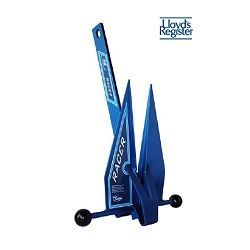
For a lightweight anchor, try this Manson racing anchor, at 7.3 lbs., currently on sale at Defender for $189.99.
It's pricey, but a friend bought one that weighs 10 lbs. for his 40' racer, and we used it to anchor his boat when he served as race committee. It set so firmly that he had to use his engine to break it free. We were all very impressed by it.
Interesting, I'ii look forward to testing results since that anchor begs for a head to head with Danforth and Fortress. P/S has managed to bend some light weight anchors in past testing.
<blockquote id="quote"><font size="1" face="Verdana, Arial, Helvetica" id="quote">quote:<hr height="1" noshade id="quote"><i>Originally posted by Dave5041</i> <br />The CQR became the defecto standard a long time ago, and it is still a very good anchor. The plethora of "a new concept in anchoring" devices have had time to be winnowed to a few top performers like those mentioned. It is unlikely that there will ever be a "best" anchor, but we do seem to have some new "standards" that can fill our lockers <hr height="1" noshade id="quote"></font id="quote"></blockquote id="quote">
As the resident cruiser here, I concur. The CQR means secure and it is. When my mom had a stroke and I had to leave my wife on the hook in Newport RI for 2.5 weeks, or when my wife had jury duty and we had to leave our 39' C&C anchored during which a serious waterspout rolled they and bent the man overboard pole, what held? The CQR on all chain, and a lot of it.
Anchorsten - nicknamed after the beer and because of my passion for anchoring...
Notice: The advice given on this site is based upon individual or quoted experience, yours may differ. The Officers, Staff and members of this site only provide information based upon the concept that anyone utilizing this information does so at their own risk and holds harmless all contributors to this site.



